
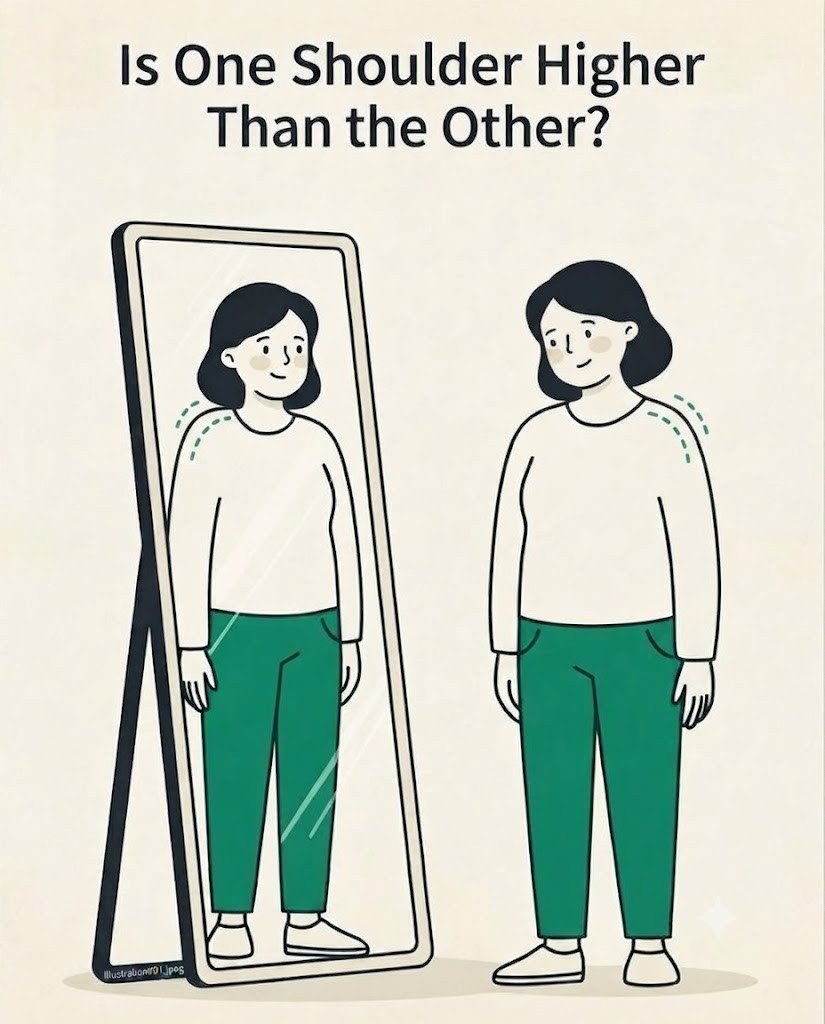
Perhaps someone tagged you in a photograph, and you suddenly noticed that one shoulder seemed higher than the other. Or maybe your shirt always slips to one side. Many people discover uneven shoulders completely by accident.
The good news is that human bodies are naturally asymmetrical. Small differences between the left and right sides are common and, in many cases, perfectly normal. However, if one shoulder consistently appears higher or lower—especially when accompanied by discomfort or restricted movement—it deserves a closer look rather than unnecessary worry.
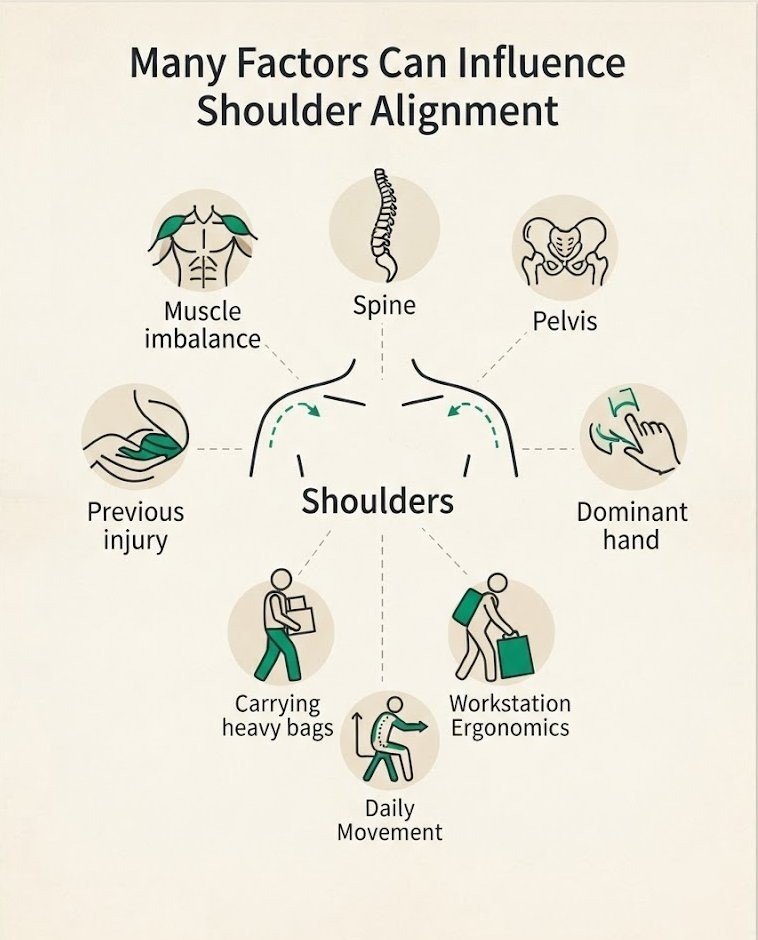
Your shoulders don't work in isolation. Their position is influenced by how your spine, rib cage, pelvis, muscles, and movement patterns work together as a single system.
Several factors can contribute to uneven shoulder alignment, including:
An uneven shoulder does not automatically indicate a medical problem. Often, it simply reflects how your body has adapted to everyday activities and movement patterns.
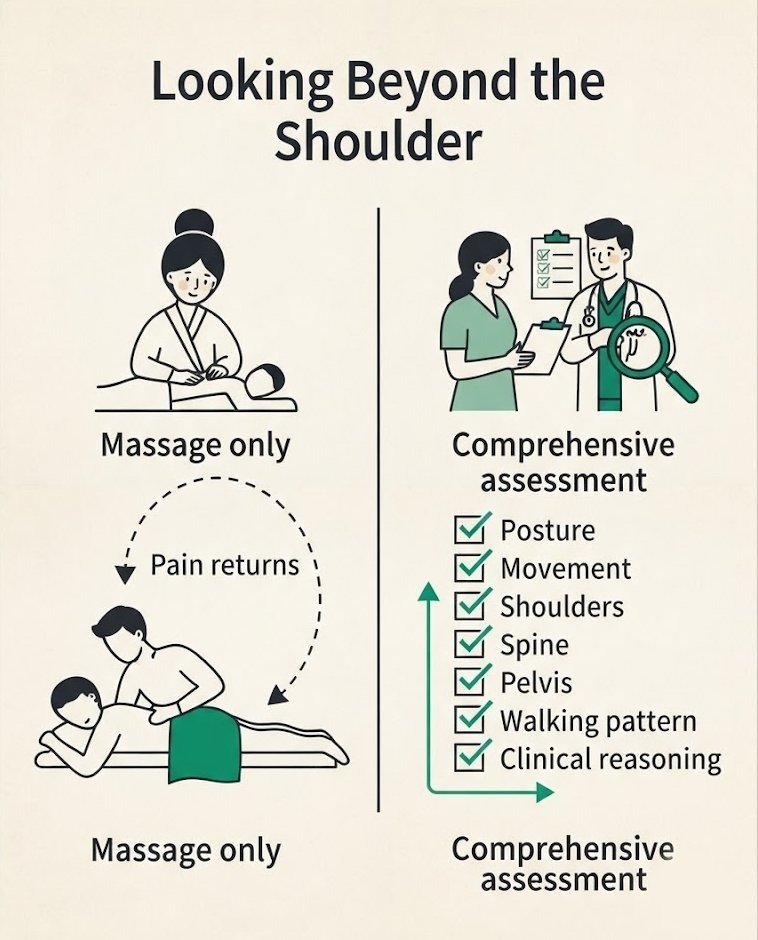
When shoulder or neck discomfort develops, it's tempting to focus only on the area that hurts. However, sometimes the shoulder that hurts is not the shoulder that started the problem. Treating symptoms alone may provide temporary relief while the underlying movement pattern remains unchanged.
A comprehensive postural and movement assessment looks beyond the shoulder itself. By evaluating your posture, spinal alignment, pelvic position, walking pattern, mobility, and functional movement, a clinician can determine whether an imbalance is clinically significant or simply a normal variation. This broader perspective helps identify the factors that may be contributing to recurring discomfort and guides a more personalized approach to care.
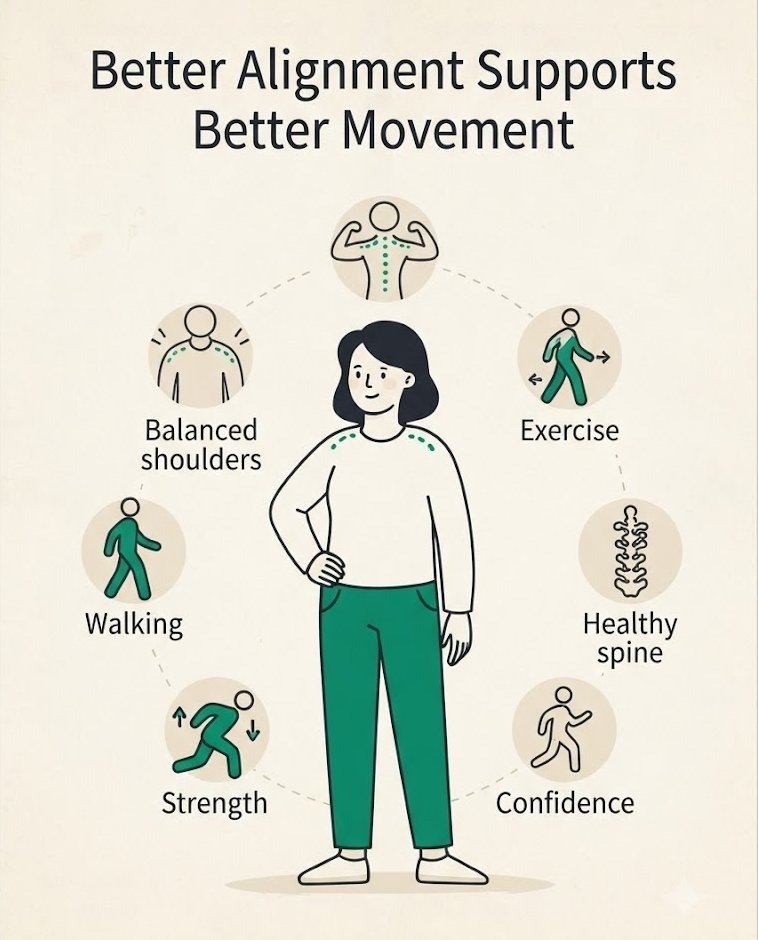
If you notice persistent changes in your posture, recurring shoulder discomfort, or movement limitations, a professional assessment can help determine whether an imbalance is contributing to your symptoms.

How your pelvis influences your entire body?
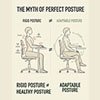
Does good posture mean sitting perfectly straight?
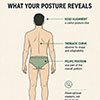
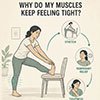
Why Do Your Muscles Always Feel Tight?

Understand Why Shoulder Pain Persists
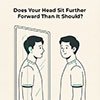
Why Does Your Head Sit Too Far Forward? What Your Posture May Be Telling You

One Shoulder Higher Than the Other? What Your Posture May Be Telling You

Does More Pain Always Mean More Damage?

Decode Your Eyes: What Are They Trying to Tell You?

Why Do You Keep Waking Between 2 AM and 4 AM?

Why Your Neck Pain Keeps Coming Back?

Should You Rest When You're in Pain?

Decode Your Tongue: What Is It Trying to Tell You?


© 2021 AeAON – Arihant Ekata Aadya Omkara Namah. All Rights Reserved.