
Posture is something we often notice without thinking about it. One shoulder may sit slightly higher, the head may drift forward, or you may naturally stand with more weight on one leg. It is tempting to label these differences as “bad posture” and assume they need to be corrected.
But posture is more useful when viewed as a clue, not a diagnosis.
The way you hold your body reflects how you have adapted to your daily environment, activities and movement habits.
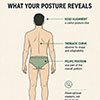
Your head position, shoulder level, spinal curves and pelvic position can provide useful observational information. But these are not fixed ideals that every body must match.
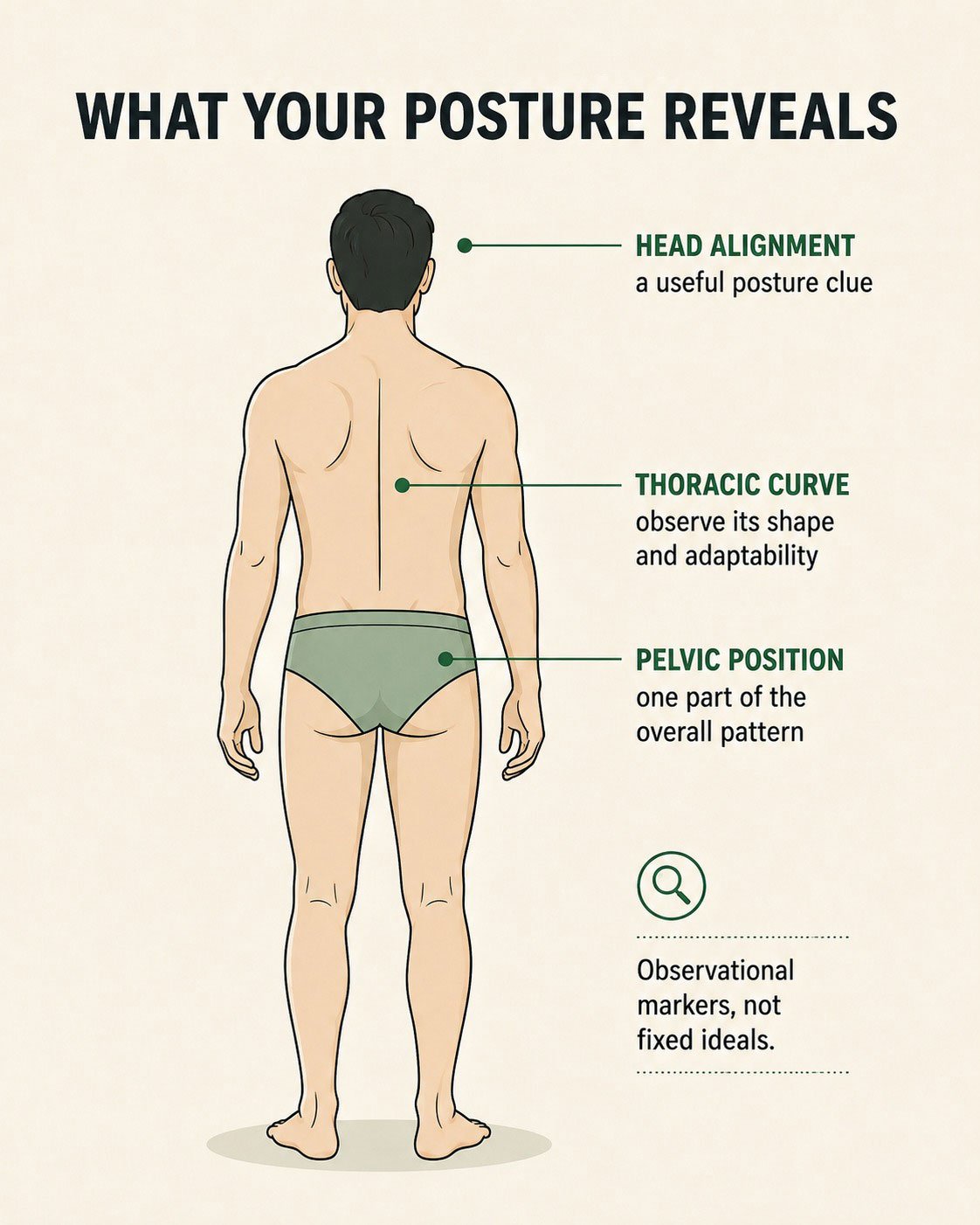
WHAT YOUR POSTURE REVEALS:Posture markers such as head alignment, thoracic curve and pelvic position shown as observational clues rather than fixed ideals.
Posture does not come from the spine alone. It is influenced by the interaction between your joints, muscles, movement habits and everyday demands.
Factors such as:
can all influence how you stand and move.
This means that two people can have similar-looking postures but completely different underlying movement strategies.
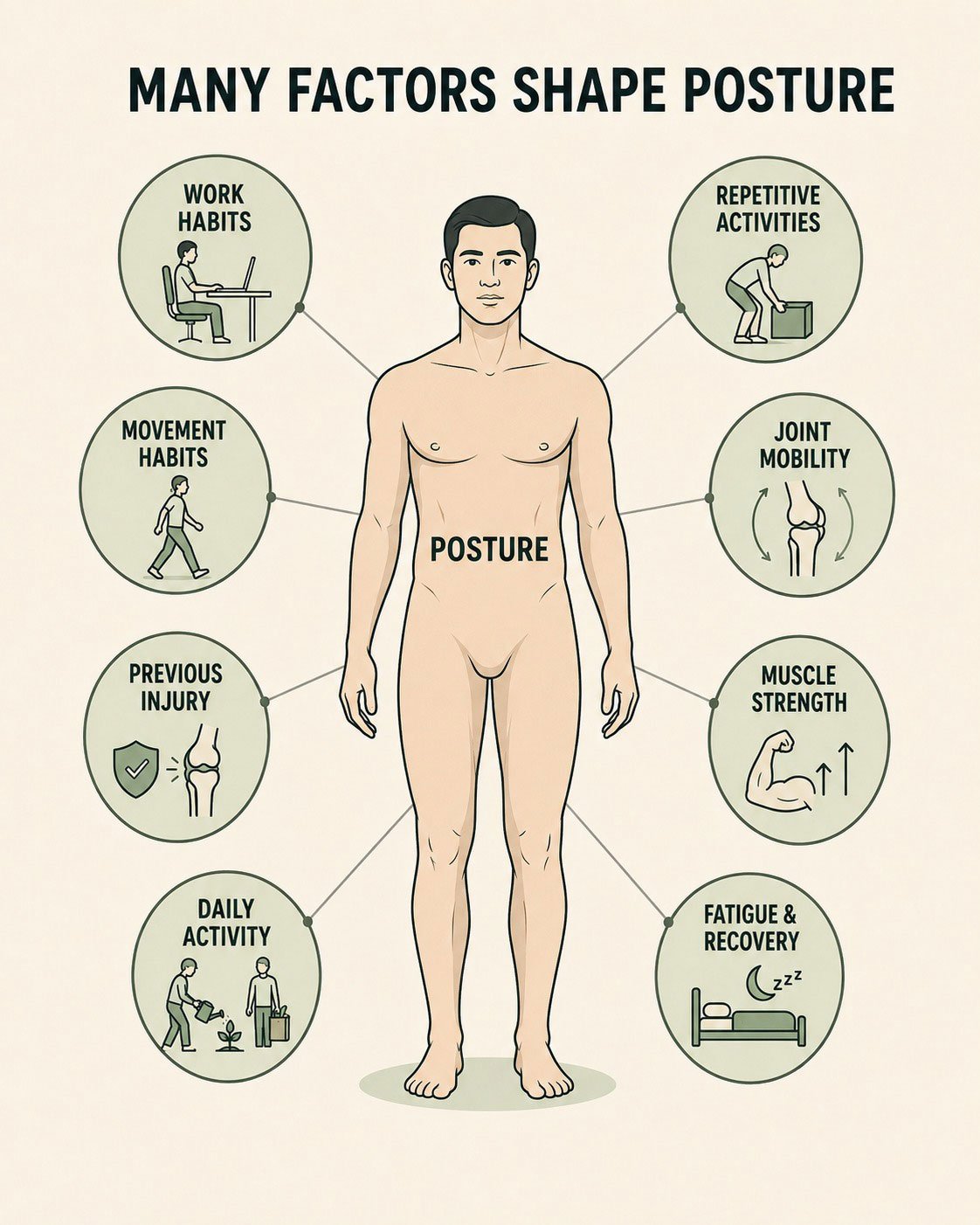
MANY FACTORS SHAPE POSTURE:Showing the multiple physical and lifestyle factors that can influence posture.
A photograph of you standing still gives only a
snapshot.
It does not tell us how you walk, bend,
reach, squat, rotate or respond to physical load. It also cannot
fully reveal whether an observed asymmetry actually affects
function.
That is why a movement assessment can provide a much broader picture—looking at movement quality, joint mobility, strength, endurance and functional activities.
Static posture tells you where your body rests. Movement assessment reveals how well it functions.
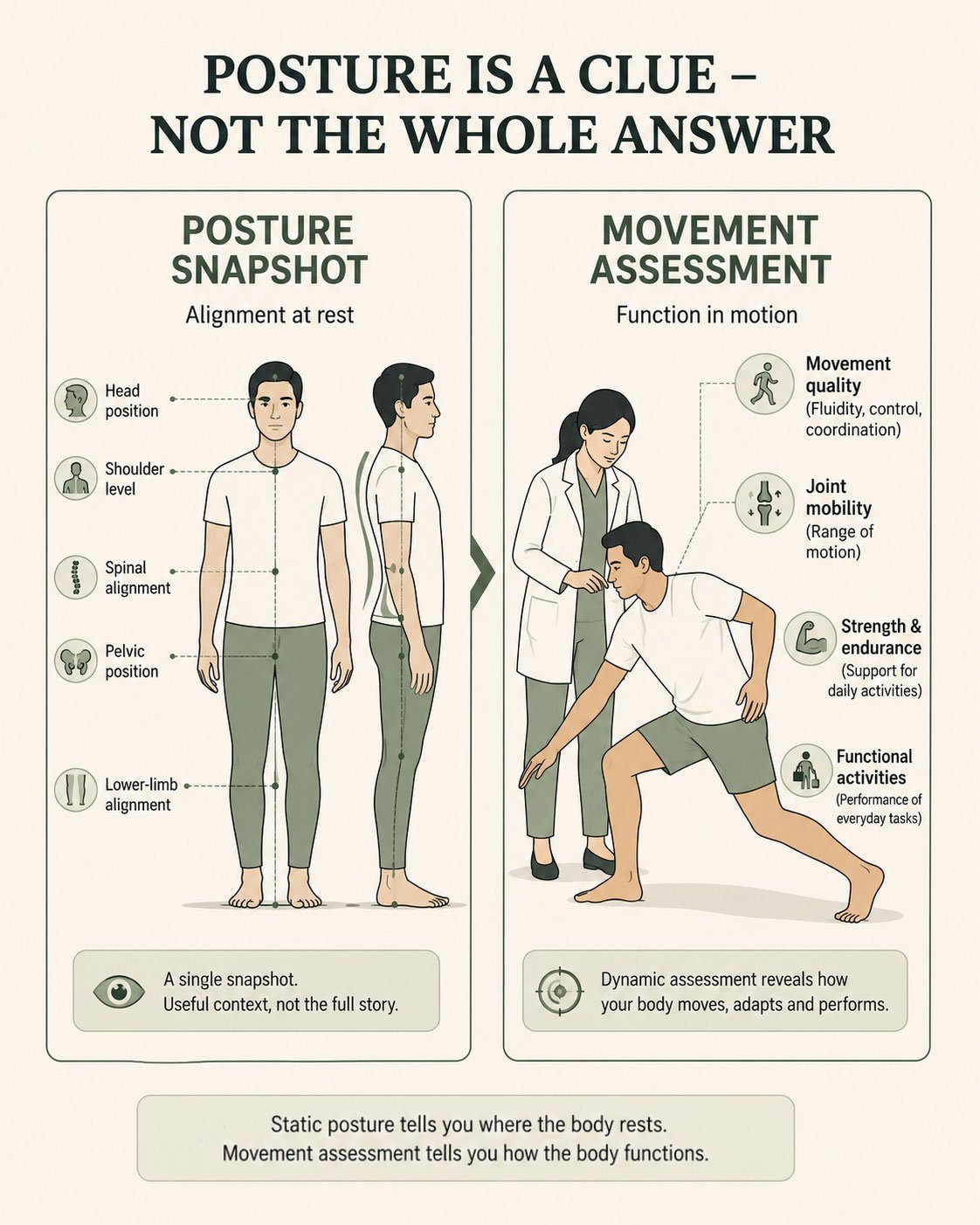
POSTURE IS A CLUE, NOT THE WHOLE ANSWER: Comparing a static posture snapshot with a dynamic movement assessment.
Healthy posture is not about holding one “perfect” position all day.
Your body needs the ability to change position, move efficiently, tolerate physical demands and adapt to different situations. Movement variety may be more valuable than trying to maintain a rigid ideal alignment.
The goal is therefore not simply to make your posture look perfect. It is to build a body that is mobile, strong, adaptable and capable of handling everyday demands.
If persistent pain, movement restriction or functional difficulty accompanies your postural concerns, a professional assessment can help identify what actually needs attention.
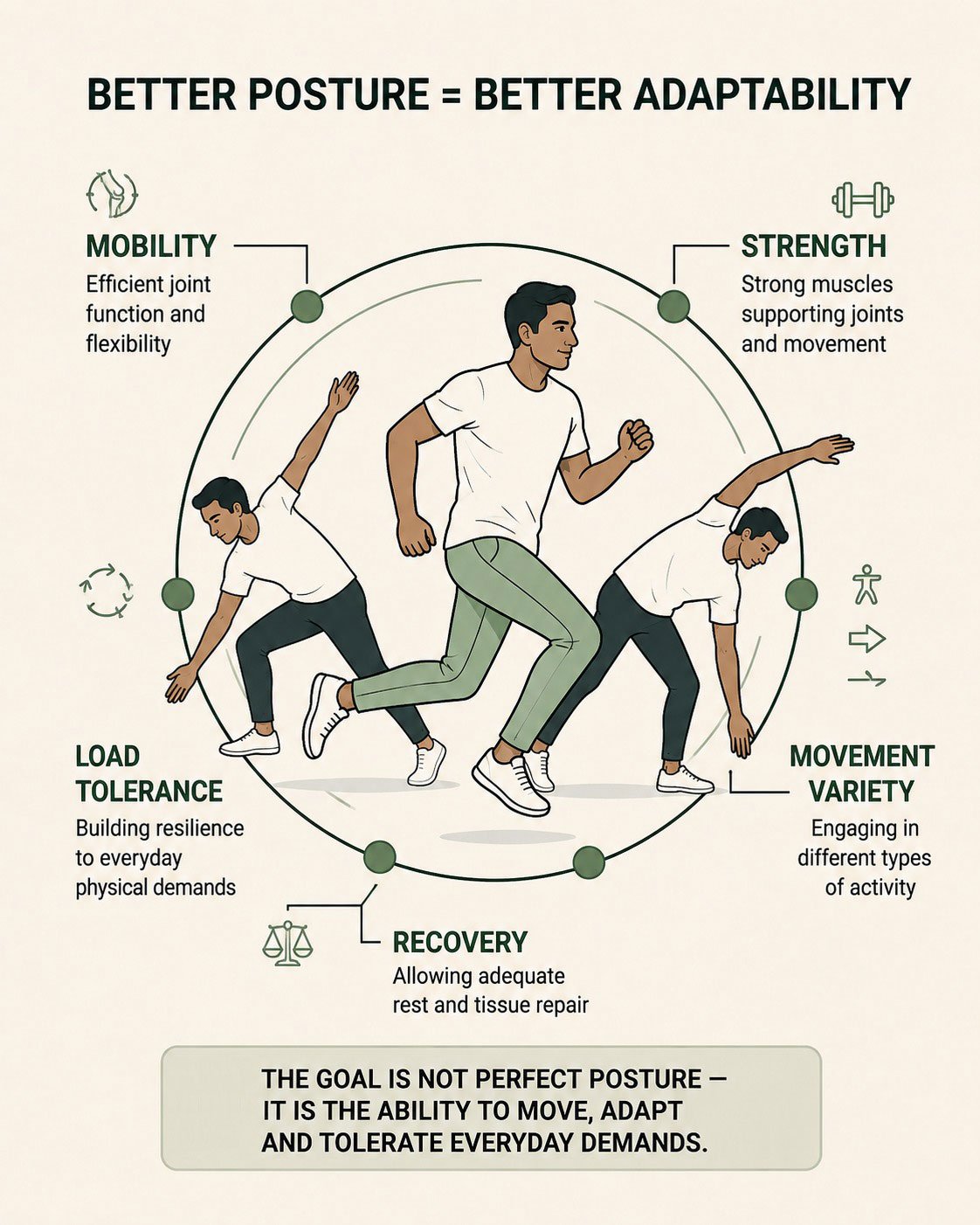
BETTER POSTURE = BETTER ADAPTABILITY: Mobility, strength, movement variety, load tolerance and recovery supporting adaptable movement.
At AeAON Aarohan, we look beyond posture alone—to understand how your body moves, adapts and responds to everyday demands.
How your pelvis influences your entire body?
Does good posture mean sitting perfectly straight?
Why Do Your Muscles Always Feel Tight?

Understand Why Shoulder Pain Persists
Why Does Your Head Sit Too Far Forward? What Your Posture May Be Telling You

One Shoulder Higher Than the Other? What Your Posture May Be Telling You

Does More Pain Always Mean More Damage?

Decode Your Eyes: What Are They Trying to Tell You?

Why Do You Keep Waking Between 2 AM and 4 AM?

Why Your Neck Pain Keeps Coming Back?

Should You Rest When You're in Pain?

Decode Your Tongue: What Is It Trying to Tell You?

© 2021 AeAON – Arihant Ekata Aadya Omkara Namah. All Rights Reserved.