
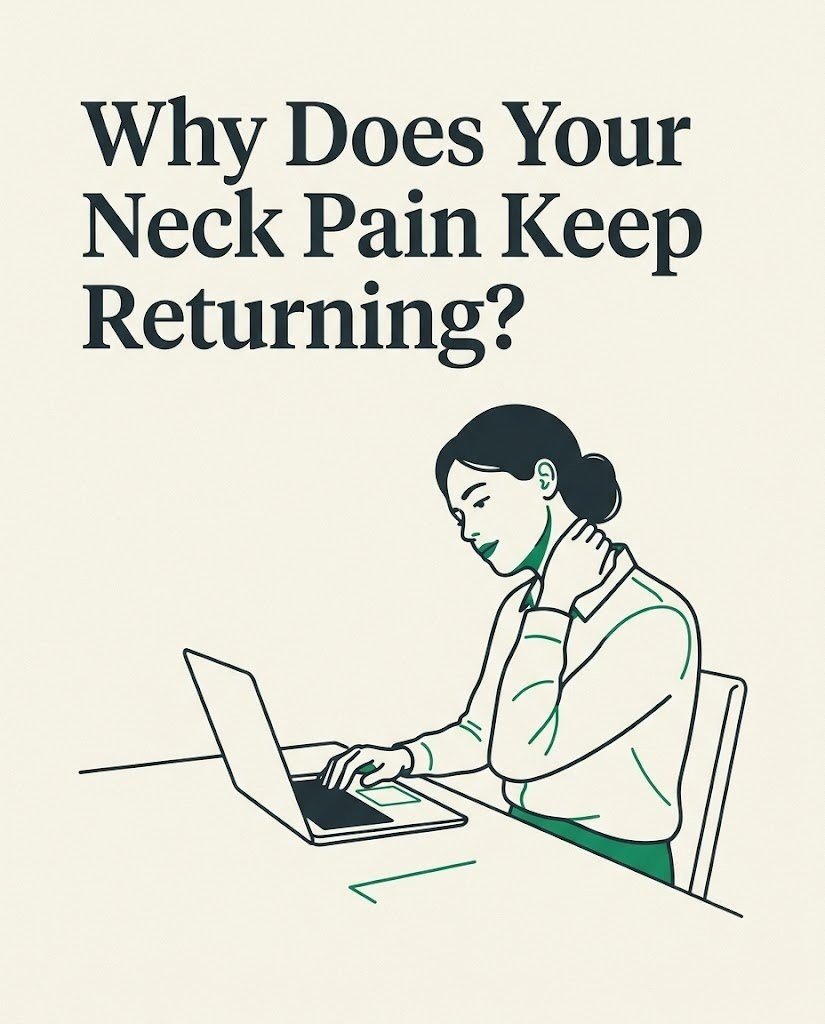
It is a familiar cycle for many people. Your neck feels tight, so you schedule a massage, apply a heat pack, or take a painkiller. The discomfort eases for a while.
A few days later, the stiffness is back.
Temporary treatments can provide valuable symptom relief, but they don't always explain why the pain keeps returning. If recurring neck pain becomes a pattern, it may be worth looking beyond the painful area itself.
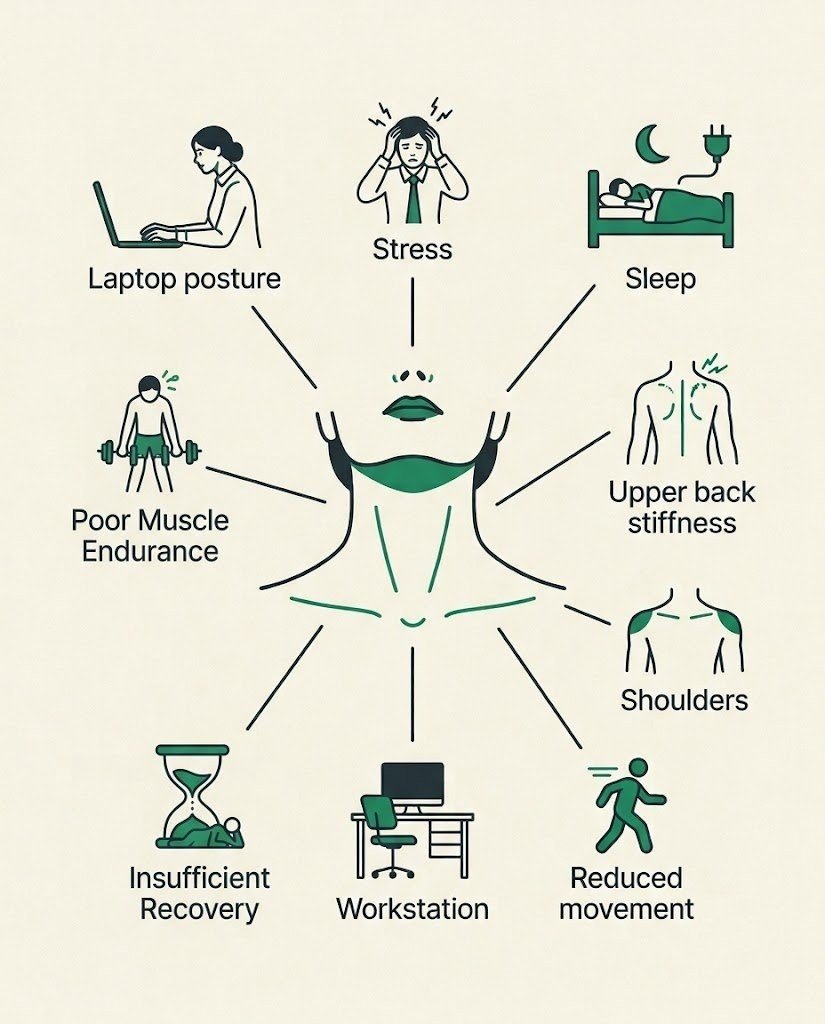
Modern pain science shows that recurring neck pain is rarely caused by a single factor. Your neck works as part of an interconnected system involving the upper back, shoulders, muscles, joints, and nerves.
Spending long hours at a desk, working at an uncomfortable workstation, moving too little during the day, or sleeping in an awkward position can gradually place extra demands on the neck. Stress-related muscle tension, reduced upper back mobility, previous injuries, and general physical conditioning may also contribute. Rather than one major problem, recurring neck pain often develops when several small contributing factors combine over time.
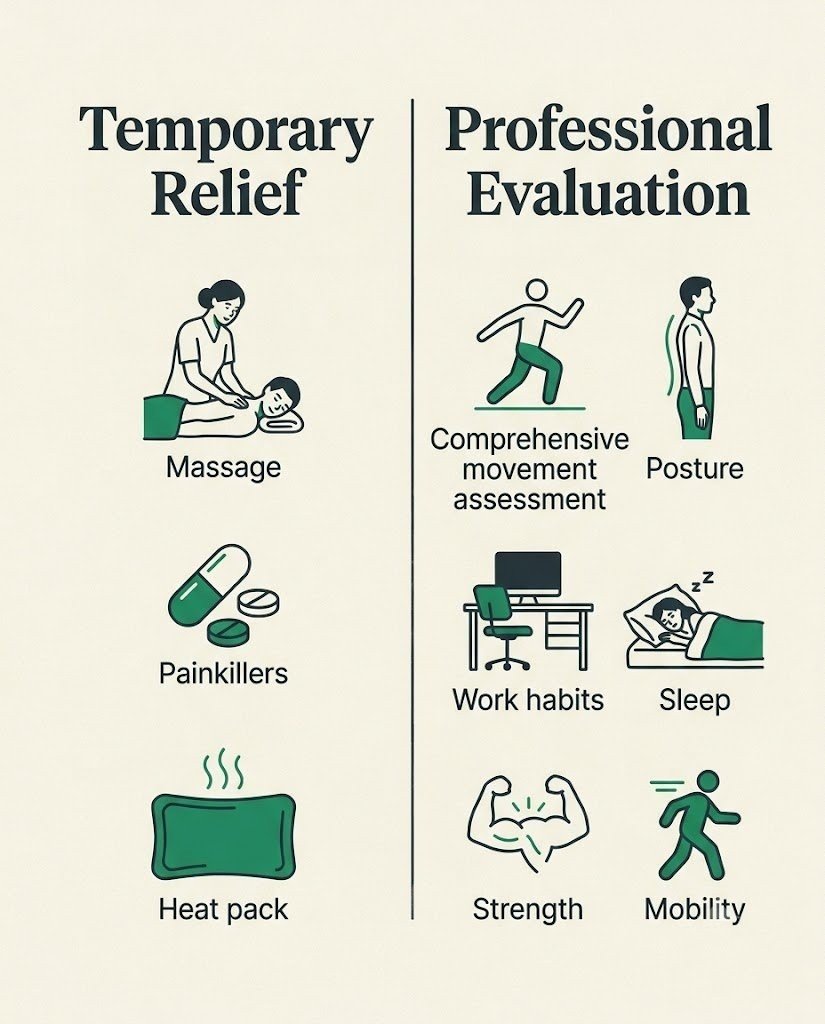
Because every person is different, recurring neck pain rarely responds well to a one-size-fits-all solution. Persistent or recurring symptoms deserve a broader assessment rather than focusing only on where the pain is felt.
Looking at movement patterns, posture, daily work habits, sleep, muscle balance, physical activity, and stress levels can help uncover the factors that may be contributing to recurring neck pain. Understanding these interactions allows for a more personalized management plan that addresses the individual rather than simply chasing the symptom.
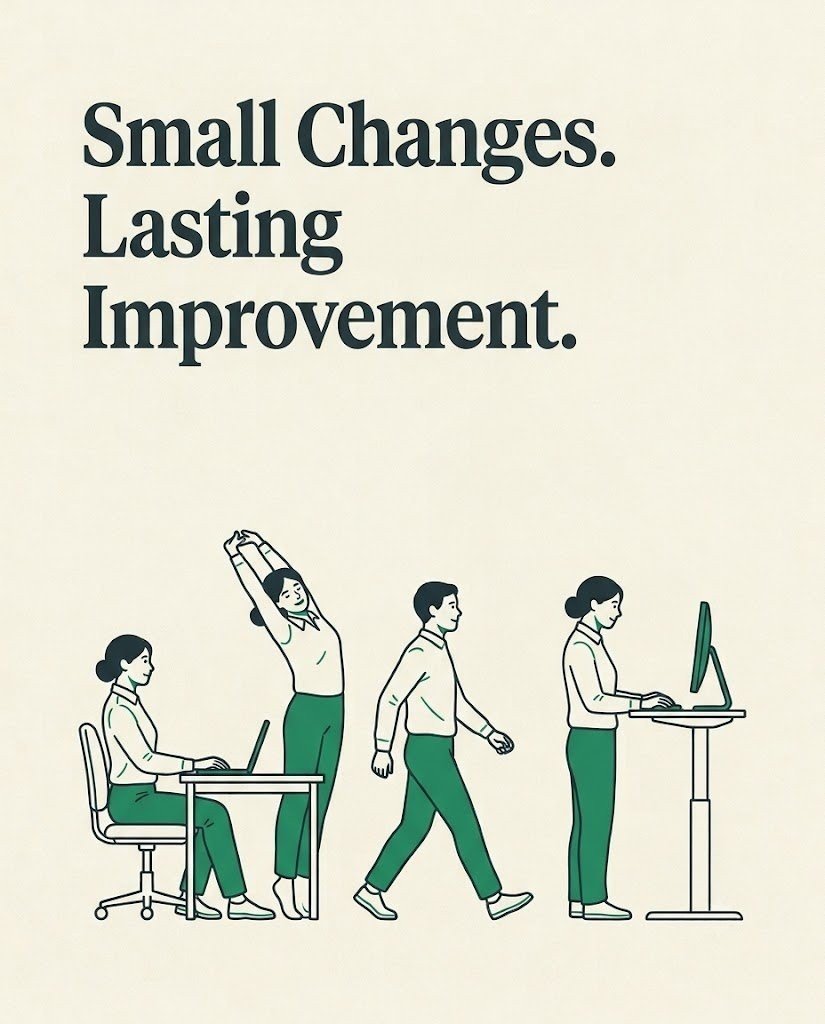
Recurring neck pain isn't necessarily a sign that your body is failing—it may simply mean that one or more contributing factors haven't yet been addressed. Understanding those factors is often the first step toward lasting improvement.
Persistent or worsening neck pain deserves professional assessment, particularly if it is accompanied by numbness, weakness, severe trauma, fever, unexplained weight loss, or changes in bladder or bowel function.
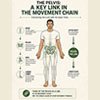
How your pelvis influences your entire body?
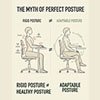
Does good posture mean sitting perfectly straight?
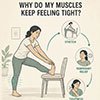
Why Do Your Muscles Always Feel Tight?

Understand Why Shoulder Pain Persists
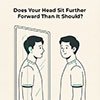
Why Does Your Head Sit Too Far Forward? What Your Posture May Be Telling You

One Shoulder Higher Than the Other? What Your Posture May Be Telling You

Does More Pain Always Mean More Damage?

Decode Your Eyes: What Are They Trying to Tell You?

Why Do You Keep Waking Between 2 AM and 4 AM?

Why Your Neck Pain Keeps Coming Back?

Should You Rest When You're in Pain?

Decode Your Tongue: What Is It Trying to Tell You?


© 2021 AeAON – Arihant Ekata Aadya Omkara Namah. All Rights Reserved.