
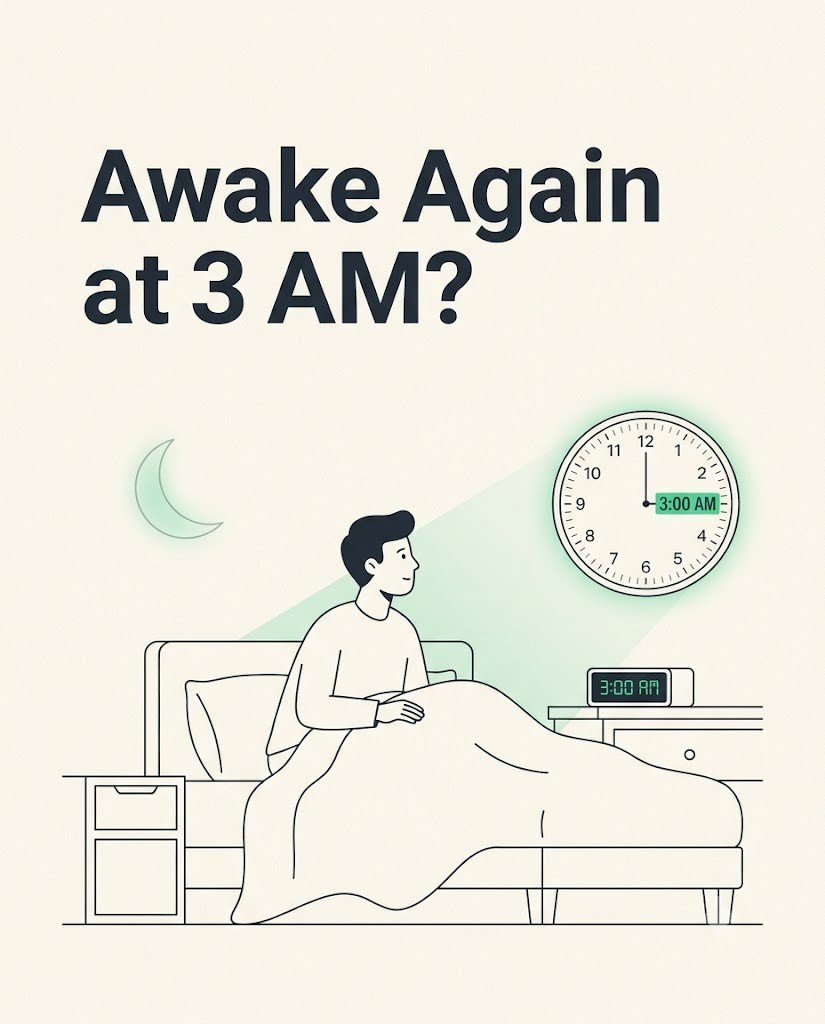
You fall asleep without difficulty, only to find yourself awake at exactly 3 AM—again. Sound familiar?
If you experience frequent night waking, you're not alone. Brief awakenings during the night are a normal part of human sleep. However, repeatedly waking up between 2 AM and 4 AM, especially at a similar time each night, can become frustrating and may be a sign that something is interrupting your normal sleep pattern.
Understanding the pattern is the first step toward better rest.
Sleep naturally occurs in cycles that alternate between light sleep, deep sleep, and REM sleep. Brief periods of wakefulness between these cycles are completely normal, and many people drift back to sleep without even remembering them.
However, when these natural transitions are disturbed, you may find yourself fully awake.
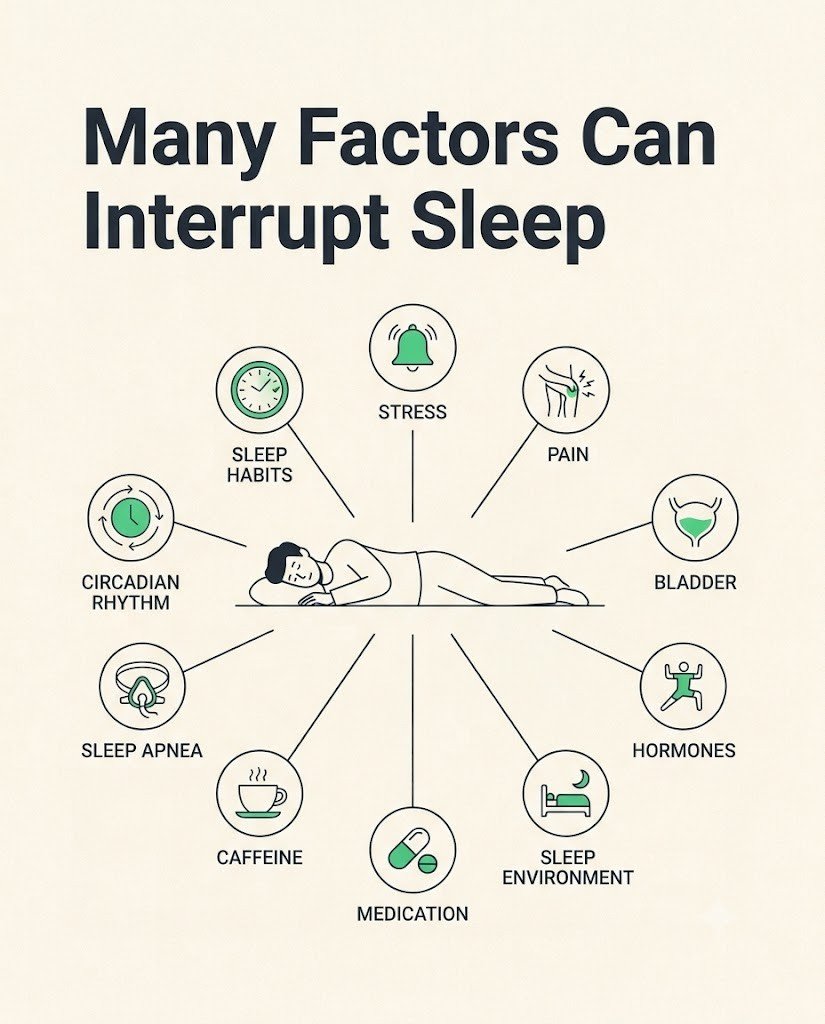
If you've ever wondered, "Why do I wake up at 3 AM?", the answer is rarely simple. Stress, physical discomfort, hormonal changes, medications, caffeine, alcohol, environmental disturbances, bladder function, or sleep disorders such as sleep apnea can all interrupt sleep. In most cases, persistent night waking is influenced by several interacting factors rather than a single isolated cause.

Some traditional healthcare systems have long observed that recurring symptoms at particular times of the night may reflect broader patterns within the body. While these observations can provide useful clinical clues, they should not be interpreted as standalone diagnoses.
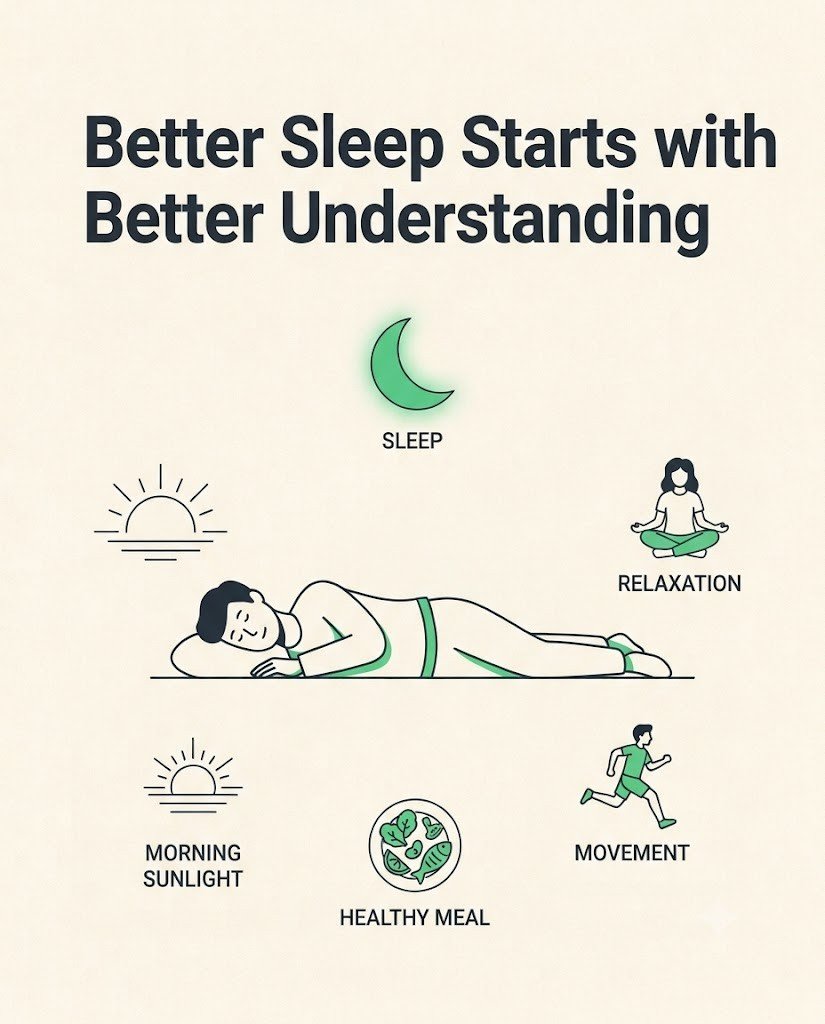
Modern evidence-informed care also looks beyond the clock. It considers your sleep habits, stress levels, medications, medical history, lifestyle, physical symptoms, and overall health to understand why a particular pattern may be occurring.
Rather than asking "Which organ wakes me at 3 AM?", a more helpful question is:
If you regularly wake between 2 AM and 4 AM, keeping a simple sleep diary may help identify recurring patterns. Recording when you wake, what wakes you, and how you feel the following day can provide valuable information to discuss with a healthcare professional.
If interrupted sleep is affecting your daytime well-being or continues despite healthy sleep habits, a professional assessment can help identify possible contributing factors.

How your pelvis influences your entire body?
Does good posture mean sitting perfectly straight?

Why Do Your Muscles Always Feel Tight?

Understand Why Shoulder Pain Persists

Why Does Your Head Sit Too Far Forward? What Your Posture May Be Telling You

One Shoulder Higher Than the Other? What Your Posture May Be Telling You

Does More Pain Always Mean More Damage?

Decode Your Eyes: What Are They Trying to Tell You?

Why Do You Keep Waking Between 2 AM and 4 AM?

Why Your Neck Pain Keeps Coming Back?

Should You Rest When You're in Pain?

Decode Your Tongue: What Is It Trying to Tell You?


© 2021 AeAON – Arihant Ekata Aadya Omkara Namah. All Rights Reserved.