
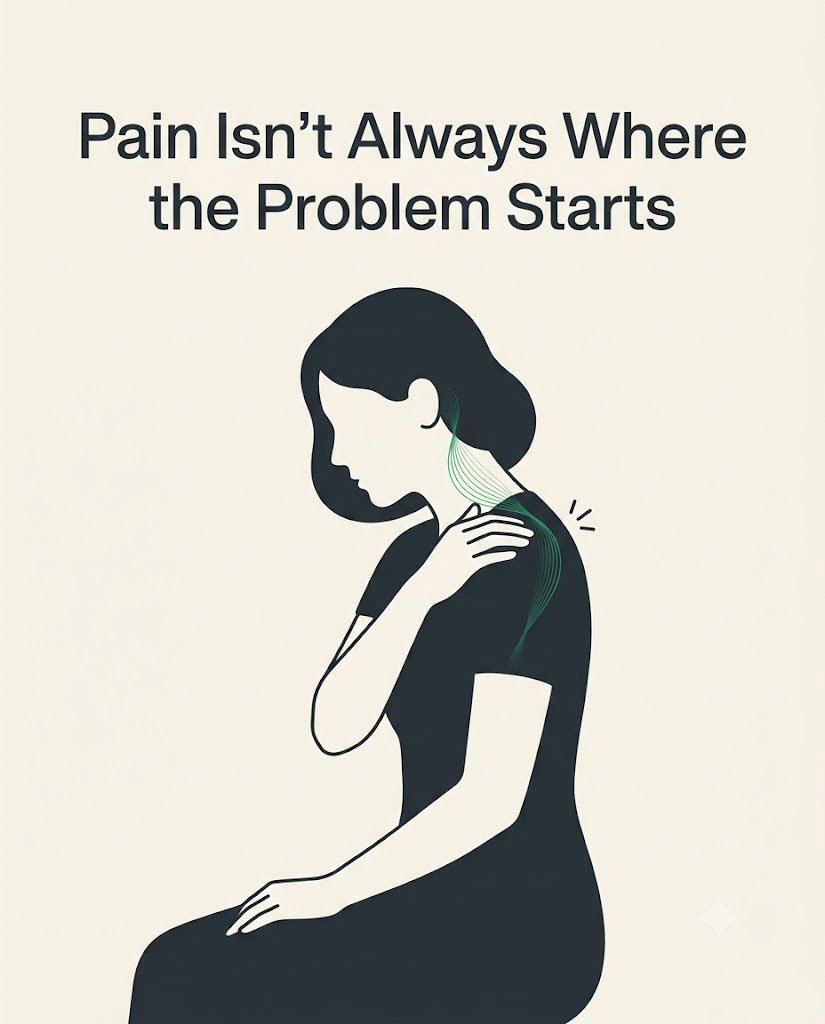
Your shoulder hurts, so you massage your shoulder. It feels better for a while. By evening, the familiar ache is back.
If this sounds familiar, you're not alone. When pain keeps returning, it's natural to focus all your attention on the area that hurts. But the human body doesn't work as isolated parts—it functions as an interconnected system. In many cases, the true source of pain may lie somewhere entirely different from where you feel it.
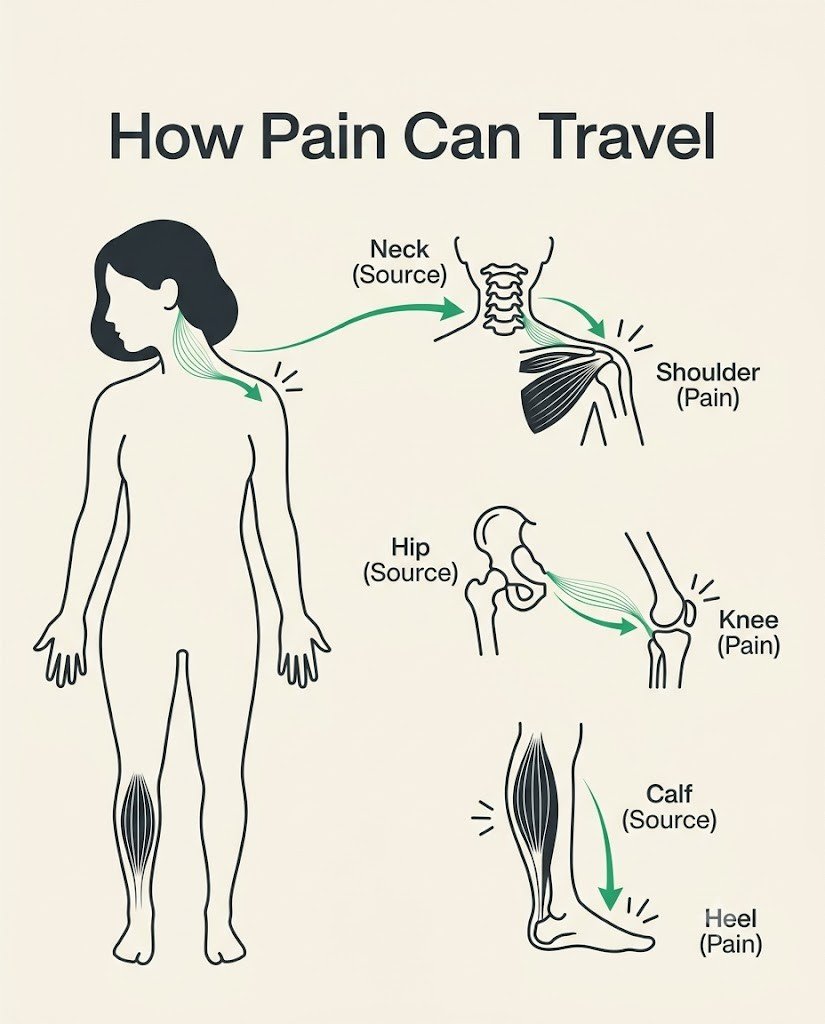
From the perspective of anatomy and pain neuroscience, where you feel pain isn't always where the problem begins. Two common mechanisms help explain this: referred pain and movement compensation.
Referred pain occurs when nerves from different parts of the body share pathways within the nervous system, causing discomfort to be felt away from its actual source. Movement compensation develops when a stiff joint, weak muscle, or restricted movement pattern forces other parts of the body to work harder. Over time, this extra strain can lead to pain in areas that are simply compensating—not necessarily causing the problem.
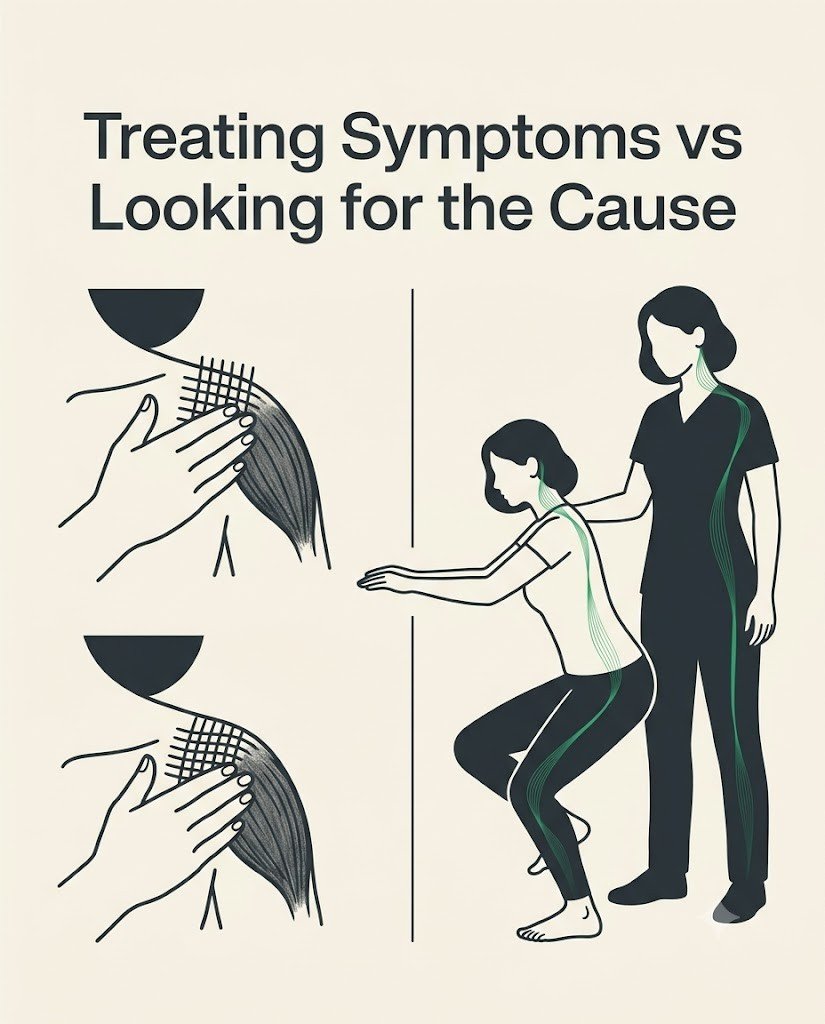
While not every painful condition follows this pattern, hidden imbalances can sometimes create symptoms elsewhere in the body.
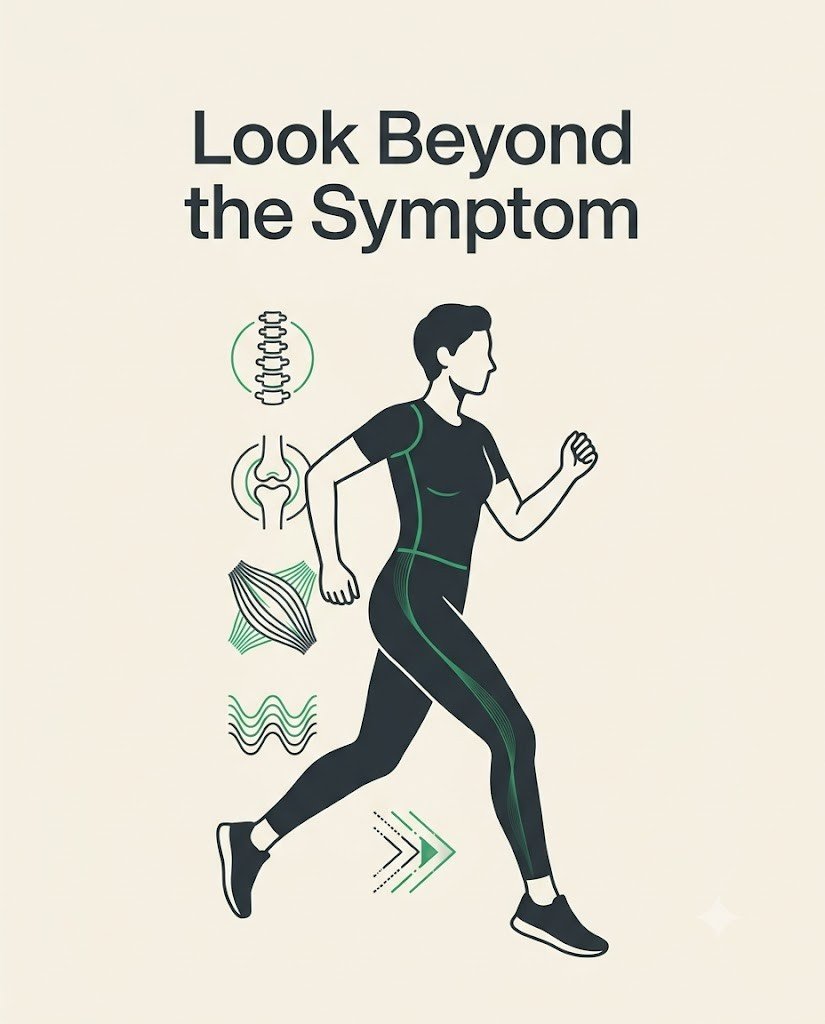
Localized injuries certainly occur, and not all pain originates elsewhere. However, when discomfort persists or repeatedly returns, it's often worth looking beyond the painful area itself.
A comprehensive assessment considers how posture, joint mechanics, muscle balance, movement patterns, and nerve function work together. Understanding these relationships can help identify contributing factors that may otherwise go unnoticed and guide a more personalized approach to care.
Pain is a message. Understanding where it comes from is the first step toward lasting relief.
If you're living with pain that keeps returning despite temporary relief, a professional clinical evaluation can help uncover the factors contributing to your symptoms.
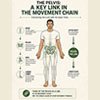
How your pelvis influences your entire body?
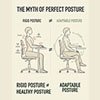
Does good posture mean sitting perfectly straight?
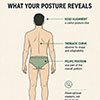
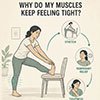
Why Do Your Muscles Always Feel Tight?

Understand Why Shoulder Pain Persists
Why Does Your Head Sit Too Far Forward? What Your Posture May Be Telling You

One Shoulder Higher Than the Other? What Your Posture May Be Telling You

Does More Pain Always Mean More Damage?

Decode Your Eyes: What Are They Trying to Tell You?

Why Do You Keep Waking Between 2 AM and 4 AM?

Why Your Neck Pain Keeps Coming Back

Should You Rest When You're in Pain?

Decode Your Tongue: What Is It Trying to Tell You?


© 2021 AeAON – Arihant Ekata Aadya Omkara Namah. All Rights Reserved.